- Home
- Learn About Antique Furniture and Reproductions
- Resources
- Reproduction Furniture Styles
- Victorian Furniture: A Guide to Style, Craftsmanship, and Identification
Victorian Furniture: A Guide to Style, Craftsmanship, and Identification
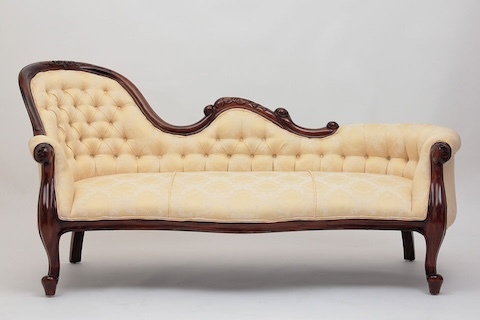
Nostalgia has long shaped the appeal of fine furniture, and few styles evoke it as powerfully as Victorian design. For collectors and decorators alike, Victorian furniture pieces remain perennially popular, admired for their intricate craftsmanship, romantic detail, and historical significance. While these furnishings are more prevalent today than many other historical styles, understanding how to identify authentic Victorian furniture can distinguish a valuable heirloom from a well-crafted reproduction.
With more than 25 years of experience producing high-quality antique reproductions, Laurel Crown is uniquely positioned to guide you through the hallmarks of this celebrated design period. Whether you are an avid collector or simply curious about Victorian furniture, this guide illuminates the defining characteristics, historical context, and technical features that make the style enduringly captivating.
Understanding Victorian Furniture
The Victorian era, spanning the reign of Queen Victoria from 1837 to 1901, was a time of rapid social, cultural, and technological transformation. A burgeoning middle class, eager to display its affluence, fueled a demand for domestic furnishings that blended old-world elegance with contemporary practicality. English cabinetmakers responded with a range of revivalist designs, drawing inspiration from foreign and historical influences, including Egyptian, Greek, Rococo, and Oriental motifs. Each sub-period of Victorian furniture developed its own distinct characteristics, reflecting the evolving tastes of the era.
Key Substyles of Victorian Furniture
- Gothic Revival (1830 – 1860)
Gothic Revival marked a departure from classical Grecian forms, embracing the architectural and decorative motifs of the medieval period. Pieces were commanding in scale and featured intricate patterns such as scalloping, rosettes, pointed arches, and turreted forms. Dark, rich woods, often mahogany or walnut, emphasized the imposing presence of this style. - Rococo Revival (1840 – 1865)
Rococo Revival furniture epitomized elegance and grace, with delicate ornamentation and light, airy forms. Carvings often incorporated cherubs, floral motifs, shells, and scrolls executed in high relief. Upholstered chairs and settees became more common, reflecting the era’s growing emphasis on comfort alongside aesthetic beauty. - Renaissance Revival (1860 – 1890)
Renaissance Revival furniture drew from a multitude of earlier design traditions to create monumental, highly decorative pieces. Common features included heavily carved finials, turned or fluted legs, burled panels, inset marble tops, and elaborately shaped corners. This substyle communicated wealth, sophistication, and a flair for the dramatic. - Eastlake (1870 – 1890)
In response to the extravagance of Rococo and Renaissance Revival designs, Charles Lock Eastlake advocated for simpler, more geometric forms that emphasized craftsmanship over ornamentation. Eastlake furniture retained decorative appeal but favored modest curves and restrained motifs. His treatise, Hints on Household Taste (1868), codified these principles, influencing both handcraft and industrial production. - Arts and Crafts (1880 – 1914)
The Arts and Crafts movement emerged as a response to mass-produced Victorian furniture, emphasizing simplicity, durability, and social responsibility. Designs were characterized by strong lines, functional forms, limited ornamentation, and a preference for light woods. This approach sought to harmonize aesthetic beauty with ethical craftsmanship.
Identifying Victorian Furniture
Recognizing authentic Victorian furniture requires an understanding of several technical and stylistic markers:
- Decorative Details
Victorian furniture frequently employed spiral or barley-twist legs, balloon-back chairs, and turned or carved feet. The invention of the coiled spring allowed chairs to have deeper, more supportive seats, necessitating durable upholstery. Luxurious fabrics such as damask, velvet, brocade, and needlepoint were standard, reflecting the era’s opulence. - Proportions and Scale
In contrast to the Regency period’s understated elegance, Victorian furniture embraced grandeur. Pieces were often imposing, with generous proportions and sinuous lines, carefully carved details, and ornate romantic motifs. This philosophy of “more is more” is evident across chairs, tables, cabinets, and settees. - Wood Selection and Finishes
Mahogany, oak, and rosewood formed the backbone of Victorian furniture. Walnut was occasionally used for less expensive pieces, particularly during the Gothic Revival period. By the late Victorian era, woods were frequently finished with dark varnishes, sometimes obscuring the original grain. Marble tabletops and inlaid veneers were common on higher-end sideboards, tables, and cabinets.
Why Victorian Furniture Endures
While Victorian furnituremakers often drew inspiration from previous eras, the designs of the 19th century demonstrate remarkable technical achievement and aesthetic sophistication. Knowing how to identify key characteristics—such as wood type, carving style, proportion, and upholstery—enhances appreciation and ensures informed acquisition, whether for a personal collection or a curated interior.
At Laurel Crown, each Victorian antique reproduction is carved, sanded, and finished by hand, reflecting the meticulous craftsmanship of the era. Our collection allows collectors, decorators, and enthusiasts to experience the elegance of Victorian design while enjoying the durability and precision of modern techniques. We can also create custom-made furniture in the Victorian style.
For guidance on identifying period furniture or exploring our curated Victorian furniture collection, please contact our team of experts. Our commitment to historical accuracy and artisanal excellence ensures that every piece embodies the timeless beauty of the Victorian tradition. And to shop by furniture style, check out our furniture styles page.
Our Advantages
-

Trustworthy Reputation.
Online businesses come and go, but our customers trust our 26 years of experience building fine furniture to deliver on our promises. Read our story and our customer reviews to see why people love Laurel Crown.
-

Quality is our Priority.
We don't take shortcuts. We like to do things the old-fashioned way and that includes the way we make our furniture. Fine hardwoods, solid joinery techniques, hand-tied upholstery—just a few ways we build our furniture to last through wear and tear over the years.
-

Yes, We Customize.
Don't see what you want? We'll work with you to design and build the perfect custom furniture for your individual home. Just want to change the upholstery or wood color? We do that too, just give us a call. We love doing custom projects for our customers!
-

100% Money-Back Guarantee.
We understand buying furniture online can be daunting so we offer a 100% money-back guarantee and no restocking fees on all orders except when customized or shipped internationally. We offer a satisfaction guarantee because we stand by the quality of our workmanship. And not only do we believe in our products, we use them too!