- Home
- Learn About Antique Furniture and Reproductions
- Resources
- History
- The Elegance, History, and Craftsmanship of Antique Chairs
The Elegance, History, and Craftsmanship of Antique Chairs
A Historical Overview of Classic Antique Chair Designs
Chairs are among the most expressive forms of furniture, uniting function with refined craftsmanship and design intention. Across centuries, antique chair styles have reflected evolving cultural tastes, technical innovation, and the pursuit of elegance in domestic interiors. We view antique chairs not merely as seating, but as enduring artifacts of artistry and proportion. This guide explores the defining characteristics of the most influential styles, from the graceful curves of Queen Anne design to the ornate detailing of Victorian craftsmanship, offering a deeper understanding of their historical significance and lasting appeal.
Queen Anne Chairs: Graceful Curves and Refined Simplicity
Emerging in the early 18th century, Queen Anne chairs exemplify elegance and restraint. Named after the English monarch, this style marked a departure from the heavy ornamentation of preceding periods. Characterized by cabriole legs, pad or trifid feet, and gently curved silhouettes, Queen Anne chairs emphasize form and proportion over elaborate carving. Upholstered seats were often modestly adorned, with damask, velvet, or needlepoint providing subtle comfort without overwhelming the refined structure.
Technically, these chairs reflect careful attention to joinery and shaping. Cabriole legs, for instance, require precision bending and carving to ensure both beauty and stability. Queen Anne chairs embody the period’s philosophy that grace is achieved through balance and harmony rather than excessive decoration.
Chippendale Chairs: Ornamental Sophistication and Structural Precision
Thomas Chippendale, an 18th-century cabinetmaker of renown, elevated chair design through a synthesis of Gothic, Rococo, and Chinese influences. Chippendale chairs are distinguished by elaborately carved backs, ball-and-claw feet, and intricate fretwork. Common back designs include the pierced ribbon-back and the elaborate scroll or lattice patterns, combining aesthetic intricacy with structural integrity.
In addition to stylistic flourishes, antique Chippendale armchairs showcase advanced woodworking techniques. Mortise-and-tenon joinery and carefully proportioned framing ensure durability, while the precise execution of carved motifs demonstrates exceptional craftsmanship. These chairs convey both elegance and authority, making them ideal centerpieces in formal interiors.
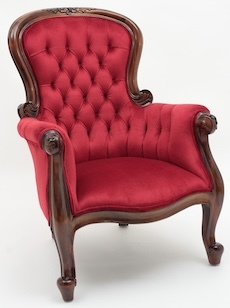
Victorian Chairs: Opulence and Romantic Detail
Victorian chairs, popular during Queen Victoria’s reign (1837–1901), are celebrated for their ornate design and sumptuous upholstery. The style encompasses a range of revivalist influences, from Gothic and Rococo to Renaissance and Eastlake. Common features include balloon or balloon-back chairs, carved spiral or barley-twist legs, deep seats, and rich fabrics such as brocade, velvet, and damask.
Victorian chairs often incorporated new technologies, such as coiled springs beneath upholstered seats, allowing for deeper, more comfortable seating. Their proportions are generous, reflecting the period’s embrace of grandeur and visual abundance. Whether part of a parlor, dining set, or private study, Victorian chairs epitomize the marriage of decorative exuberance with domestic functionality. See our Victorian Parlor Chair as a great example.
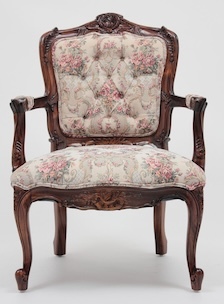
Louis XV and Louis XVI Chairs: French Elegance and Symmetry
French antique chairs, particularly those of the Louis XV (1715–1774) and Louis XVI (1774–1793) periods, are revered for their artistry and refinement. Louis XV chairs are noted for their rococo curves, cabriole legs, and intricately carved motifs, including shells, scrolls, and floral patterns. Upholstery is often luxurious, complementing the flowing lines of the frame.
Louis XVI chairs, in contrast, favor neoclassical restraint and symmetry. Straight, tapered legs, fluted carvings, and geometrically balanced backs characterize this style. Both periods demonstrate a meticulous approach to proportion, detail, and the integration of wood and textile, making them exemplary models of French craftsmanship.
Windsor Chairs: American Practicality and Rustic Charm
The Windsor chair, originating in 18th-century England and widely adopted in colonial America, is distinguished by its turned spindles, saddle seat, and splayed legs. Unlike the heavily upholstered European styles, Windsor chairs emphasize lightweight construction, comfort, and functionality.
From a technical standpoint, Windsor chairs rely on precise joinery and careful shaping of spindles to ensure both durability and aesthetic appeal. The simplicity of the form belies the skill required to produce a chair that is simultaneously strong, elegant, and comfortable for everyday use.
Identifying Antique Chairs: Key Considerations
When evaluating antique chairs, attention to detail is paramount. Examine the joinery—hand-cut mortise-and-tenon connections, dovetails, and pegs often indicate authenticity. Consider the wood species and finish, as well as the quality of carving or inlay work. Upholstery, while sometimes replaced over time, can also provide insight into the era and intended function of the chair. Finally, proportions, leg style, and back design are essential markers of period and style.
The Enduring Appeal of Antique Chairs
Antique chairs offer more than seating—they provide a tangible connection to history, craftsmanship, and design innovation. By understanding the defining characteristics of Queen Anne, Chippendale, Victorian, French, and Windsor chairs, collectors and decorators can select pieces that harmonize with both historic and contemporary interiors.
Our curated collection of antique chair reproductions honors these traditions. Each chair is meticulously hand-carved, sanded, and finished to reflect the artistry and precision of its historical prototype, ensuring that every piece embodies timeless elegance. For those seeking guidance in identifying antique chairs or exploring our collection of solid mahogany dining chairs, our team of experts is available to provide informed, personalized assistance.
Our Advantages
-

Trustworthy Reputation.
Online businesses come and go, but our customers trust our 26 years of experience building fine furniture to deliver on our promises. Read our story and our customer reviews to see why people love Laurel Crown.
-

Quality is our Priority.
We don't take shortcuts. We like to do things the old-fashioned way and that includes the way we make our furniture. Fine hardwoods, solid joinery techniques, hand-tied upholstery—just a few ways we build our furniture to last through wear and tear over the years.
-

Yes, We Customize.
Don't see what you want? We'll work with you to design and build the perfect custom furniture for your individual home. Just want to change the upholstery or wood color? We do that too, just give us a call. We love doing custom projects for our customers!
-

100% Money-Back Guarantee.
We understand buying furniture online can be daunting so we offer a 100% money-back guarantee and no restocking fees on all orders except when customized or shipped internationally. We offer a satisfaction guarantee because we stand by the quality of our workmanship. And not only do we believe in our products, we use them too!